You can earn a good salary and still wonder where the money went.
You can pay every bill on time and still feel financially vulnerable.
You can have good credit, a professional career, a beautiful home and very little money that gives you actual choices.
That is why I think we need to change the way women are taught to budget.
Most budgeting conversations begin with spending.
What can you cut?
What did you buy that you did not need?
How often did you eat out?
Which subscription should you cancel?
Should you stop buying coffee?
Those questions have a place. Spending matters.
But there is a much bigger question I want women asking:
What is your money building?
That is where budgeting becomes more than expense management.
It becomes ownership.
And that is the conversation we need to have.
The Problem Is Not Always That Women Cannot Budget

There are women who are extraordinarily good at managing money.
They know when every bill is due.
They know exactly how much is needed for groceries.
They can make $200 do the work of $300.
They know how to move expenses around when something unexpected happens.
They know which payment can wait three days and which one cannot.
They know how to make Christmas happen.
They know how to get a child through college.
They know how to help an aging parent.
They know how to keep the household running when income changes.
They know how to survive.
That is financial skill.
But there is an uncomfortable distinction we need to make.
Being good at making money stretch is not the same as using money to build ownership.
A woman can become exceptionally efficient at survival.
She can pay everybody.
Take care of everybody.
Keep everything running.
Make every deadline.
Solve every emergency.
Then wake up years later and realize that very little of what passed through her hands remained hers.
That is why budgeting needs a bigger objective.
The goal cannot simply be to make it through another month.
What Should a Budget Actually Do?
At its simplest, a budget helps you understand and direct income and expenses.
But I want women to expect more from it.
A useful budget should help answer questions such as:
What does my life actually cost?
What am I protecting?
What am I building?
What am I enjoying?
What is consuming too much of my income?
What becomes possible if my income increases?
What happens if my income stops?
What am I likely to own five years from now if I continue making the same financial decisions?
Those are strategic questions.
And when women begin asking them, budgeting stops being merely an exercise in controlling spending.
It becomes a way to direct resources toward the life you want.
That distinction led me to create a framework I call The Ownership Budget™.
What Is The Ownership Budget™?

The Ownership Budget™ is a Financial Feminism framework created by Dr. Tonika Bruce that examines money through four functions: LIVE, PROTECT, OWN and ENJOY.
The four functions answer four different questions.
LIVE: What does it cost to operate my current life?
PROTECT: What money is creating financial resilience?
OWN: What money is helping me acquire or build assets, equity or other forms of ownership?
ENJOY: What money am I intentionally using to enjoy my life?
This does not replace every financial planning tool.
It is a lens.
And the lens matters because many women know exactly how much they spend on groceries but have never asked how much of their income is deliberately moving toward ownership.
Let’s look at each part.
LIVE: Know What Your Life Actually Costs
One of the most valuable financial numbers a woman can know is surprisingly basic.
How much does it cost to operate your essential life every month?
Not your salary.
Not your gross income.
Not your credit score.
Your number.
What does your life require?
Your LIVE category may include expenses such as housing, utilities, essential food, transportation, insurance, childcare, medication, minimum debt payments and other necessary household expenses.
Every woman’s number will be different.
The important part is knowing it.
Why?
Because that number becomes the foundation for other decisions.
Suppose you are considering leaving your job.
You need to understand what your life requires while you transition.
Suppose you are building an emergency reserve.
You need to know what that reserve needs to cover.
Suppose someone offers you a new position.
The salary sounds impressive.
But is it impressive relative to the cost of the life that comes with it?
A $25,000 raise can look very different after changes in taxes, housing, commuting, childcare or relocation costs.
Knowing your LIVE number allows you to evaluate financial decisions against reality.
There is power in being able to say:
This is what it costs to keep my essential life operating.
Not approximately.
Not emotionally.
Numerically.
PROTECT: Money Should Give You Breathing Room
Now we move from operating your life to protecting it.
Ask yourself:
What money is protecting me if something goes wrong?
Protection may involve emergency savings, appropriate insurance coverage, cash reserves and other safeguards appropriate to your circumstances.
This money is easy to underestimate because it does not necessarily look exciting.
A cash reserve does not make an impressive photograph.
Nobody knows whether you have it.
But protection can radically change the decisions available to you.
Consider two women.
Both earn the same salary.
Both have the same terrible manager.
Both want to leave.
One has $300 available after her monthly obligations.
The other has several months of essential expenses available.
Their boss may be identical.
Their options are not.
That is what protection can create.
Time.
Space.
Options.
This is why I have talked within Financial Feminism about ideas such as the “I Can Leave” Number and the “Don’t Call Anybody” Fund.
The names are intentionally practical.
Because women know what these moments feel like.
The tire goes flat.
The refrigerator stops working.
Hours at work are suddenly reduced.
A relationship becomes unsafe or untenable.
A parent needs help.
A child has an unexpected expense.
Life happens.
A small financial problem can quickly become a larger one when there is no margin available.
Protection does not eliminate uncertainty.
It changes your capacity to respond to it.
And that is an important part of financial autonomy.
OWN: The Category I Want More Women Watching
Now we arrive at the category that deserves far more attention.
OWN.
Ask:
What am I actually building with my money?
Depending on your circumstances, appropriate examples might include retirement investments, diversified investments, business ownership, real estate equity, intellectual property or other assets.
The specific vehicle is not the point of this article.
Individual financial decisions require individual evaluation.
The important shift is making ownership visible.
If you earned $100,000 last year, how much of the money that moved through your financial life contributed to something you own?
What about $150,000?
$250,000?
Higher income does not automatically produce higher ownership.
That is an important distinction.
You can earn more and spend more.
You can earn more and borrow more.
You can earn more and upgrade everything.
You can earn more and support more people.
You can earn more and still have surprisingly little financial resilience.
Income creates capacity.
It does not decide what you do with that capacity.
You do.
Stop Waiting Until You Feel Rich Enough to Think About Ownership
One of the most expensive financial sentences may be:
“I’ll start when I make more money.”
More money arrives.
Then something else arrives with it.
A larger home.
A better car.
A new responsibility.
A different school.
More travel.
More convenience.
More people asking for help.
Another financial goal.
Life does not usually send an invitation saying:
Congratulations. Everything is settled now. You may begin building wealth.
There may never be a perfect time.
This does not mean every woman should immediately put money into an investment account regardless of her circumstances.
It means ownership deserves a place in the financial conversation before you consider yourself wealthy.
You can begin asking ownership questions now.
What do I currently own?
What am I building?
What is growing?
What creates equity?
What produces income?
What could eventually produce income?
What becomes more valuable?
What creates leverage?
What gives me choices?
Those are different questions than:
Can I afford the payment?
And that difference matters.
ENJOY: Financial Responsibility Is Not a Sentence
Now let’s talk about something financial content often handles badly.
Enjoying money.
I believe ENJOY belongs in the Ownership Budget.
Why?
Because you are alive now.
Not only at retirement.
You have relationships now.
You have children who are this age now.
You have friends now.
There are places you want to see now.
There are experiences you value now.
A sustainable financial strategy has to acknowledge that.
This is not permission to ignore financial reality.
It is recognition that permanent deprivation is not a particularly compelling financial plan.
Maybe you love travel.
Maybe you love beautiful clothes.
Maybe you want someone to clean your house because buying back those hours genuinely improves your life.
Maybe you love restaurants.
Maybe your joy is taking your children somewhere they will remember.
Maybe you collect something.
Maybe you want the expensive handbag.
The question is not whether another person thinks your spending is worthy.
The question is whether you intentionally decided where that money belongs within the context of your financial life.
That is a completely different standard.
We Need to Stop Making Coffee the Villain
Personal finance discussions have spent an extraordinary amount of time talking about small discretionary purchases.
Coffee became practically symbolic.
Stop buying coffee and somehow financial freedom awaits.
Small expenses absolutely accumulate.
Repeated spending matters.
But I want women to be careful about allowing tiny expenses to distract them from structural financial decisions.
If you are earning $120,000 a year and building almost nothing in assets, I am more interested in understanding the structure of that $120,000 than shaming you over a latte.
What are your major fixed expenses?
How much debt are you servicing?
How much is lifestyle inflation consuming?
How much are you protecting?
How much are you investing?
How much are you giving away?
How much is disappearing into purchases you do not actually value?
Those questions can reveal far more than attacking one cup of coffee.
You should certainly examine small spending when it is materially affecting your goals.
But do not confuse visible spending with consequential spending.
A $6 purchase is visible.
Five years without deliberately building ownership can be far more consequential.
Why Can Someone Make Six Figures and Still Feel Broke?
This question matters because income and financial security are often treated as though they are interchangeable.
They are not.
A high earning woman may also have:
A large mortgage
Student debt
Childcare expenses
Private school tuition
Family responsibilities
Consumer debt
Business obligations
High insurance costs
Lifestyle expenses
Insufficient savings
Little invested outside retirement accounts
An expensive geographic location
Income that fluctuates
The salary may look impressive from the outside.
The margin may not.
This is why simply telling women to “earn more” is incomplete.
I absolutely want women earning more.
I want women negotiating.
I want women building companies.
I want women advancing professionally.
I want women monetizing expertise.
I want women participating fully in economic opportunity.
But increased income needs a destination.
Otherwise, more money can simply finance a more expensive version of the same vulnerability.
The Lifestyle Inflation Problem
Imagine earning $70,000.
Then you receive a promotion.
Now you make $90,000.
Eventually you reach $120,000.
Then $150,000.
That should create significantly more financial capacity.
And it can.
But something else can happen.
As income increases, spending quietly rises alongside it.
The apartment becomes a house.
The house becomes a larger house.
The car gets nicer.
Travel gets more expensive.
Dining changes.
Shopping changes.
Subscriptions multiply.
Conveniences become necessities.
None of those decisions is automatically wrong.
The problem appears when nearly every increase in income becomes an increase in consumption.
You are earning substantially more.
But OWN barely changed.
PROTECT barely changed.
And your lifestyle now requires the higher salary just to keep functioning.
That is lifestyle inflation.
The answer is not to refuse a better life.
The answer is to intentionally decide how income increases will be distributed before the new income becomes invisible.
When you receive a raise, ask:
How much goes to LIVE?
How much strengthens PROTECT?
How much increases OWN?
How much goes to ENJOY?
Now the raise has a strategy.
High Producing Women Have Another Financial Risk

There is another reason I wanted this conversation to be part of Financial Feminism.
Some women are not only managing their own financial lives.
They are carrying other people’s.
You may be the person everybody calls.
A child needs money.
A parent needs help.
A sibling is struggling.
A friend has an emergency.
Someone needs tuition.
Someone needs a plane ticket.
Someone cannot make rent.
And you help.
Sometimes because you genuinely want to.
Sometimes because you feel responsible.
Sometimes because everybody knows you are “doing well.”
Sometimes because saying no makes you feel guilty.
Generosity is valuable.
But generosity without financial boundaries can become expensive.
And sometimes the woman who appears most financially successful is quietly funding so many other people’s lives that she is not adequately funding her own future.
I want you to hear this clearly:
Your future is a legitimate financial obligation.
Your emergency reserve matters.
Your retirement matters.
Your ownership matters.
Your ability to stop working one day matters.
Your dreams matter.
You are allowed to be represented in your own financial plan.
You do not have to become ungenerous.
You do need to understand the cost of always being the rescuer.
Because I do not want women arriving at retirement having saved everybody except themselves.
The 30 Day Ownership Audit

Now we turn this into action.
You do not need a new app.
You do not need another planner.
You do not need a complicated spreadsheet.
Start with what already happened.
Pull the last 30 days of transactions from your primary account.
Do not change anything yet.
Do not judge anything.
Do not start canceling subscriptions halfway through the exercise.
We are gathering information.
Create four columns.
LIVE
PROTECT
OWN
ENJOY
Then begin sorting.
Housing might fall under LIVE.
An emergency savings transfer may fall under PROTECT.
A retirement contribution may fall under OWN.
Dinner with friends may fall under ENJOY.
Some expenses will be obvious.
Others may require judgment.
That is fine.
This is not an accounting examination.
You are trying to see the pattern.
When you finish, look at all four categories.
Then spend extra time with OWN.
What is actually there?
Not what you meant to do.
Not what you are planning to start next month.
Not what you hope happens when you get your next raise.
What happened?
If the number is zero, do not panic.
Do not start insulting yourself.
Do not declare yourself bad with money.
Zero is information.
And information gives us somewhere to begin.
Ask the Five Year Question
Now comes the question that can make this exercise powerful.
Ask yourself:
If I repeat this exact financial behavior for the next five years, what will I own?
Sit with it.
If nothing changed except time, what would your current behavior produce?
Would your emergency reserves increase?
Would your debt decrease?
Would your assets grow?
Would you have more equity?
Would your retirement position improve?
Would you have greater financial flexibility?
Would your income producing assets increase?
Would you own anything substantially different?
This is not meant to predict your future.
Your circumstances will change.
Your income may change.
Markets change.
Families change.
Life changes.
The purpose of the question is to force today’s financial behavior into a longer time horizon.
Because financial decisions can look small in a single month.
Repeated for sixty months, they become a pattern.
What If There Is Nothing Left to Put Toward OWN?
This is where financial advice needs to become more thoughtful.
If your essential expenses and minimum obligations consume virtually all of your income, telling you to simply “invest more” is not useful.
You need to diagnose the actual problem.
Is income insufficient relative to essential expenses?
Are major fixed costs too high?
Is high interest debt absorbing the margin?
Has lifestyle inflation increased recurring expenses?
Are you financially supporting other adults?
Is your income inconsistent?
Are there expenses that can realistically be restructured?
Could your earning power increase?
Do you need professional help evaluating debt or another financial issue?
A structural problem requires a structural response.
You cannot always coupon your way out of an income problem.
You cannot always side hustle your way out of an unsustainable housing expense.
And you cannot always invest your way around expensive debt.
The purpose of examining your numbers is to identify the actual constraint.
Then you can work on the right problem.
What If I Am Starting Late?
Start
That is the answer.
Not recklessly.
Not without understanding your financial position.
Start Learning
Start Looking
Start Asking
Start Building
Women lose additional time when we allow embarrassment about starting late to delay us even longer.
You cannot change what you did not know at twenty five.
You cannot go back and invest the money you spent at thirty two.
You cannot rewrite every financial decision you made at forty.
But you can make the next decision with more information.
Financial Feminism is not interested in shaming women for arriving late to conversations they were never properly invited into.
We are interested in what you do once you arrive.
Your Budget Is a Decision Document

This is the reframe I want you to keep.
A budget is not a punishment.
It is not a financial diet.
It is not evidence that you have failed.
It is not a monthly report card.
It is a decision document.
It says:
This is what my life costs.
This is what I am protecting.
This is what I am building.
This is what I am enjoying.
This is what I value enough to fund.
This is what I am willing to change.
This is what I am not willing to sacrifice.
This is where my money goes because I decided it belongs there.
That is fundamentally different from asking whether you have been “good” with money this month.
“A budget should not tell a woman what she cannot have. It should show her what she is building.”
Dr. Tonika Bruce
Financial Responsibility Is Not the Finish Line

Pay the bills.
Build good financial habits.
Understand debt.
Know your credit.
Save.
Do all of that.
But do not stop there.
Ask what you own.
Ask what produces.
Ask what grows.
Ask what protects you.
Ask what gives you options.
Ask what happens if the paycheck stops.
Ask whether your financial position is becoming stronger as your career becomes stronger.
Because earning more while remaining financially fragile is not the destination.
The destination is greater control over your economic life.
That is what ownership can help create.
Do This Today
Pull the last 30 days.
Create four categories.
LIVE.
PROTECT.
OWN.
ENJOY.
Sort the transactions.
Then answer two questions:
Which category needs more attention?
And:
If I repeat this exact financial behavior for five years, what will I own?
Do not try to repair everything today.
Choose one move.
Maybe you need to calculate your true LIVE number.
Maybe PROTECT is nearly nonexistent.
Maybe OWN needs to become a real category for the first time.
Maybe your financial life is so restrictive that ENJOY needs to become intentional rather than accidental.
One move.
Then another.
Then another.
That is how financial behavior changes.
Now Bring Your Answer Into the Financial Feminism Community
Reading about money is not enough.
I want women doing something with what they learn here.
So complete your 30 Day Ownership Audit.
Then come into the Financial Feminism Community.
You do not need to tell us how much you earn.
You do not need to post account balances.
You do not need to disclose private financial information.
Tell us one thing:
LIVE. PROTECT. OWN. ENJOY.
Which category needs your attention?
Then tell us what surprised you, if you want to.
Ask the question you have been afraid was too basic.
See what other women discovered.
Help another woman think through hers.
This is how we turn financial education into financial action.
And this is how we build a community where women do not have to pretend they already know everything about money before they are allowed into the conversation.
Frequently Asked Questions
There is no single budgeting method that is best for every woman. Income, debt, dependents, employment stability, goals and financial obligations vary significantly. A useful budgeting system should allow you to understand essential expenses, plan for financial risks, direct money toward future goals and make intentional decisions about discretionary spending. The Ownership Budget™ adds the categories LIVE, PROTECT, OWN and ENJOY to help women evaluate what their money is accomplishing, not merely where it was spent.
Begin by identifying what you value rather than automatically eliminating discretionary spending. Determine what your essential life costs, what needs protection, what you want to build and what you intentionally want to enjoy. Budgeting can feel less punitive when spending reductions are connected to a meaningful financial objective instead of restriction for its own sake.
Start by understanding your current financial position. Know your income, essential expenses, debt, available savings and existing assets. Building financial resilience may come before aggressive investing for some people. Increasing income, reducing expensive debt, building appropriate reserves and consistently directing money toward suitable long term assets can all contribute to wealth building over time.
Higher income does not eliminate the need for financial direction. In fact, larger incomes can create larger opportunities for both wealth accumulation and lifestyle inflation. A budget or another deliberate cash flow system can help ensure that increased earnings also strengthen savings, investments, assets and financial resilience.
There is no percentage that is appropriate for everyone. The appropriate amount depends on factors including income, age, debt, retirement goals, employer benefits, emergency reserves, dependents, taxes, risk tolerance and other financial priorities. General rules can provide educational starting points, but individualized financial planning should reflect the person’s actual circumstances.
The answer depends on the type and cost of the debt, available emergency savings, employer retirement benefits, tax considerations, investment horizon and individual risk factors. High interest debt may warrant significant attention, while completely foregoing certain employer retirement benefits may also have costs. Individualized professional advice can be appropriate when deciding how to prioritize competing financial goals.
Financial independence generally refers to having sufficient financial resources and capacity to make important life decisions without being entirely dependent on another person or a single immediate source of income. It can include income, savings, investments, assets, insurance, financial knowledge and the ability to meet personal obligations. Financial independence does not require avoiding partnership. It means having meaningful economic agency within your life.
First determine why the pattern exists. Compare take home income with essential fixed expenses, debt obligations and actual variable spending. The underlying issue may be insufficient income, high fixed costs, debt, lifestyle inflation, irregular expenses or a combination. Once the primary constraint is identified, the response can focus on the structural problem rather than relying only on small spending cuts.
Income influences the speed and range of wealth building opportunities, but consistent financial habits also matter. Building reserves, managing debt, increasing earning capacity, participating in appropriate retirement plans and investing over long periods can contribute to wealth accumulation. The specific approach should reflect income, obligations, time horizon and individual circumstances.
Several factors can create this experience, including high fixed expenses, debt, lifestyle inflation, supporting other people, inconsistent saving or investing, and spending increases that rise alongside income. Reviewing actual transactions and comparing LIVE, PROTECT, OWN and ENJOY can help reveal whether income is primarily maintaining consumption or also strengthening your financial position.
One Last Question
You do not need to become perfect with money.
You need to become more intentional with it.
So before you close this page, ask yourself:
What is my money building?
If you do not like the answer yet, that is not the end of the story.
It is the beginning of a better decision.
Tell us which category you are working on next.
LIVE.
PROTECT.
OWN.
ENJOY.
Let’s build from there.
About Dr. Tonika Bruce
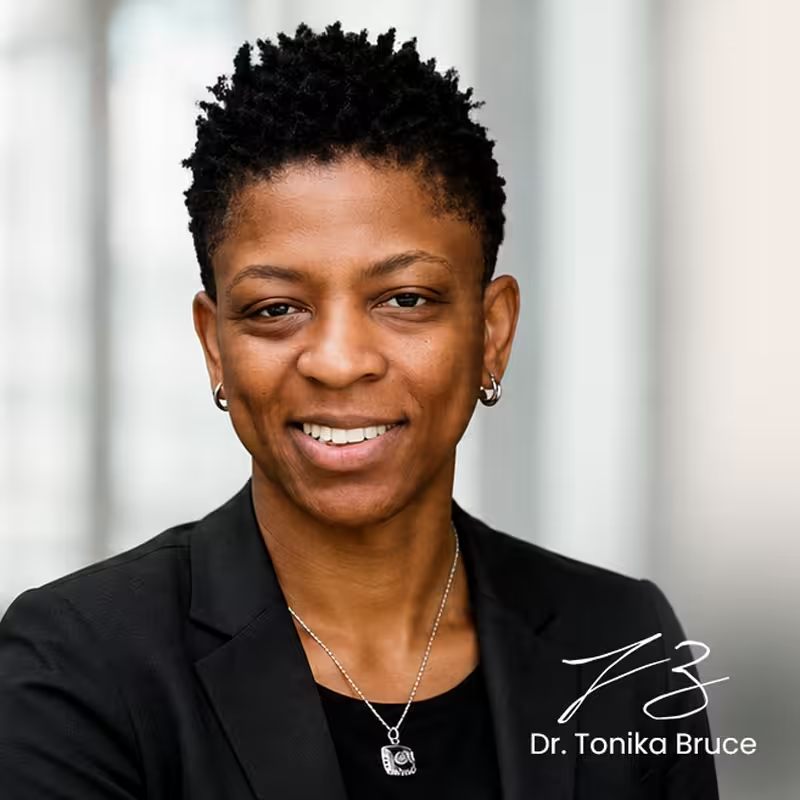
Dr. Tonika Bruce is an entrepreneur, business strategist, leadership expert, author and creator of Financial Feminism. Her work examines leadership, entrepreneurship, ownership, financial autonomy and the practical decisions that help women build greater economic agency.
Financial Feminism combines education with practical action so women can move beyond simply earning and spending money toward understanding, protecting and building what they own.
Educational Disclaimer
This article is provided for general educational and informational purposes. It does not constitute individualized financial, investment, tax or legal advice. Financial circumstances differ, and readers should evaluate decisions based on their individual situations and consult appropriately qualified professionals when needed.